

About the report
Scroll down and click through the different topics to read our report.
Introduction
Technology adoption
readinessCybersecurity
readinessCompliance readiness
Conclusion

It’s a changing
world out there –
and payroll is no exception.
Payroll is undergoing its biggest modernization in a generation, with automation, artificial intelligence, and APIs all becoming established as core payroll technologies that deliver key advantages to savvy adopters. So much so, that the question is no longer whether you should modernize payroll operations or not – it’s whether you’re ready to do so.
We’ve conducted detailed research engaging 200 finance, payroll and HR leaders from around the world, and uncovered a startling truth: confidence in future payroll readiness doesn’t match up to the size of the practical challenge of achieving it. And while midsize organizations are suffering in particular, enterprises are also finding it difficult to follow up on their aspirations to modernize.


There’s no time to lose in addressing this confidence gap. Cybersecurity threats are evolving and strengthening. Regulatory demands are accelerating. Cost pressures are mounting. And all this means that margins for error are shrinking all the time, and potentially leaving vulnerabilities that businesses like yours may not spot until it’s too late.
At CloudPay, we believe the best way
forward for future readiness is strength across three key pillars: technology
adoption, cybersecurity, and compliance.
All should be addressed together, as weakness in any of them will compromise
the strength of your core operations.


About
the guide
In this guide, we’ll establish the size of the confidence gap, explore the areas where the vulnerabilities lie for those at the biggest risk, and give you practical, actionable advice on how you can move from perceived readiness to proven readiness.
Our research
and methodology
To capture a snapshot of technology adoption, expertise, and future readiness in global payroll, CloudPay conducted comprehensive research with 200 senior decision-makers at multi-national midsize and enterprise organizations. All respondents submitted their views between September 8-24 2025.
Our respondents
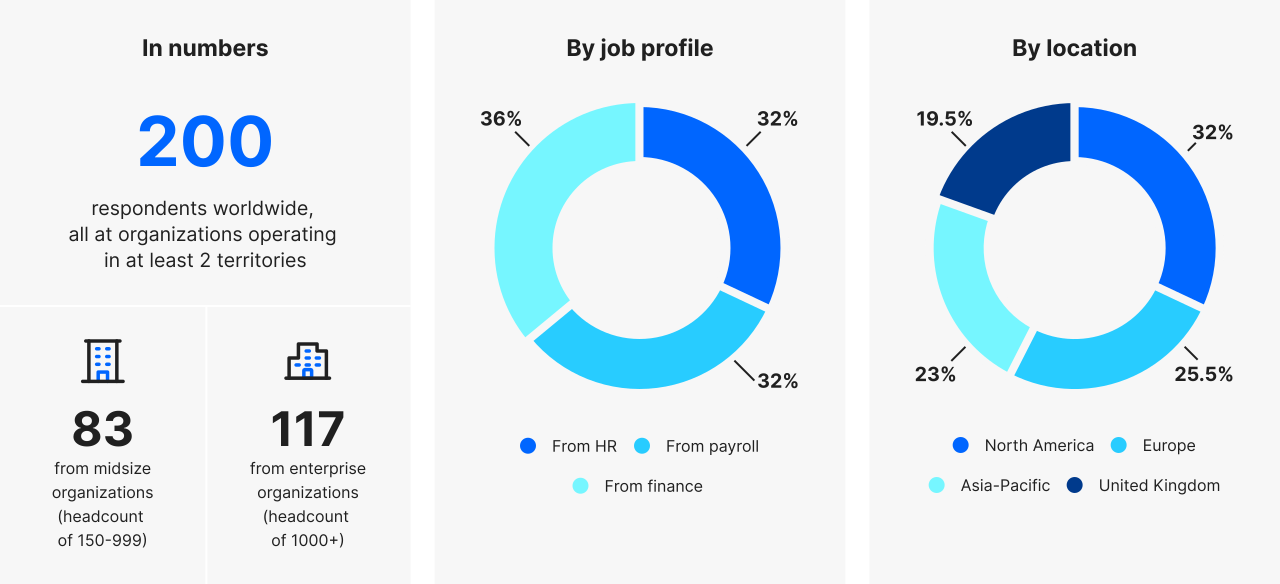
We asked these respondents a variety of quantitative questions on a range of key payroll issues, measuring responses on scales of importance, confidence, and satisfaction. Equipped with the results, our experienced specialists in product, engineering, compliance, and security have analyzed the findings to establish data-driven insights on the current state of play.
From these insights, we’ve been able to deliver practical advice and expertise on where and how organizations like yours can improve their readiness.


Payroll modernization:
An enterprise readiness snapshot
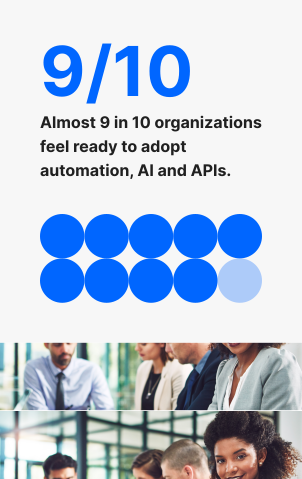
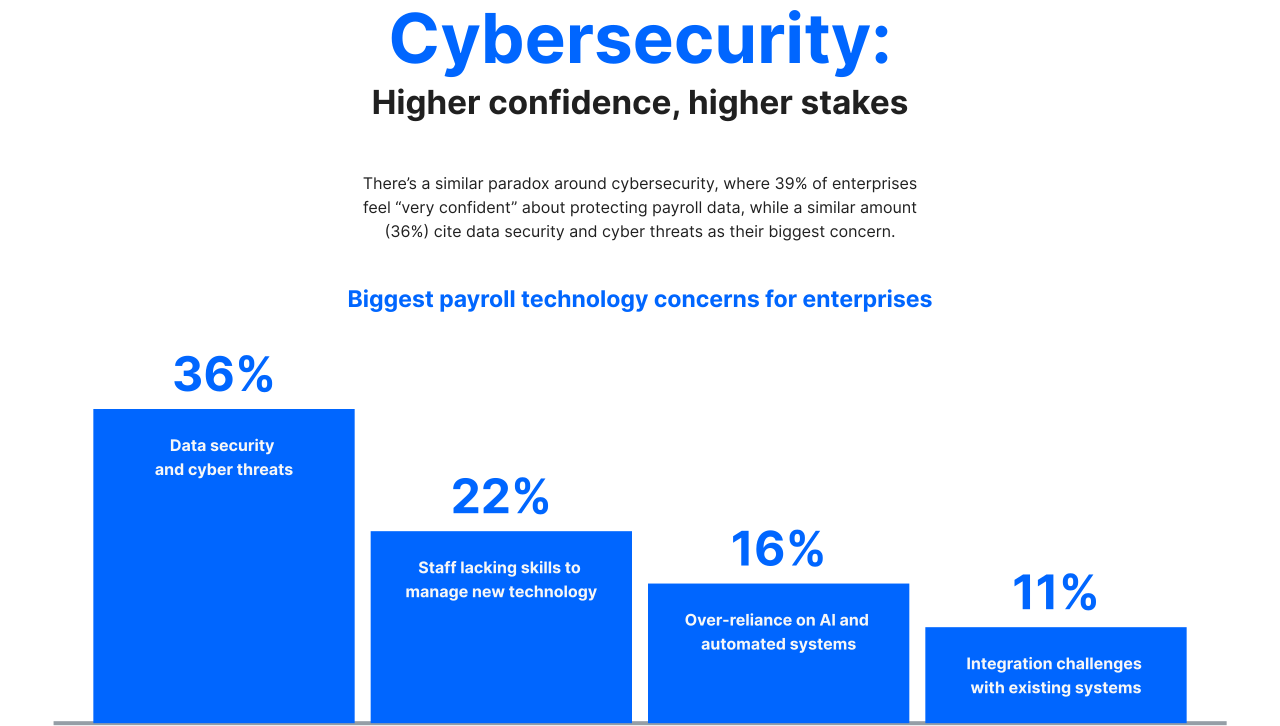
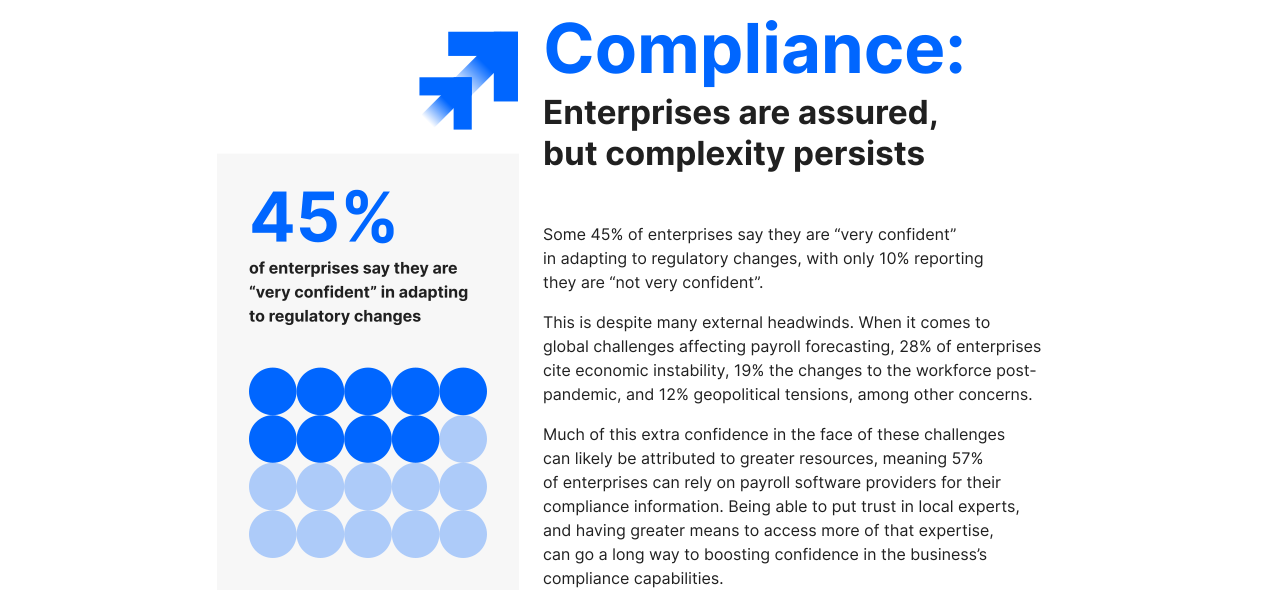
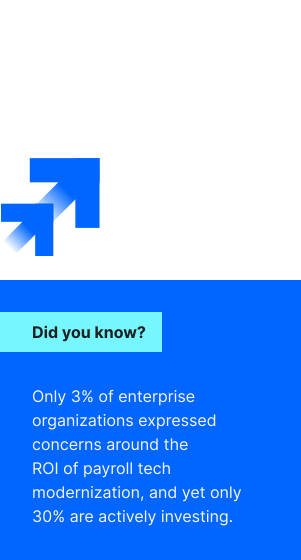
The case for payroll modernization is well-established. Our research has found that only 3% of organizations expressed ROI as a primary concern for modernization. But making modernization happen is proving to be a very different story: only 7% of respondents said they’re satisfied with their current payroll costs and processes.
This gap between ROI awareness and reality reveals a deeper challenge. While organizations express strong confidence in their readiness to modernize, practical implementation levels tell a markedly different story. Across technology adoption, cybersecurity resilience, and compliance adaptability, organizations of your size are very confident. However, the practical reality of adoption isn’t matching up to that confident outlook.
Technology adoption:
Enterprises lead in confidence, but action lags
The key technologies driving payroll transformation are the ‘three As’: automation, artificial intelligence, and APIs. And there are significant differences in confidence levels across enterprise and midsize firms.
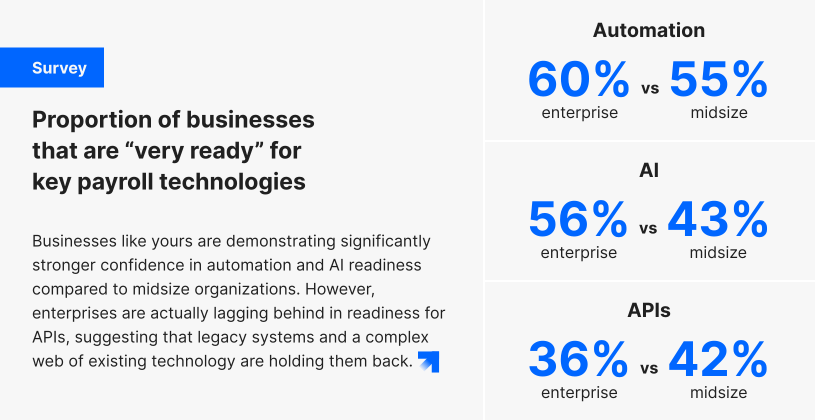
But whatever the technology,
many enterprises are encountering
some major barriers to fulfilling
their modernization aspirations:
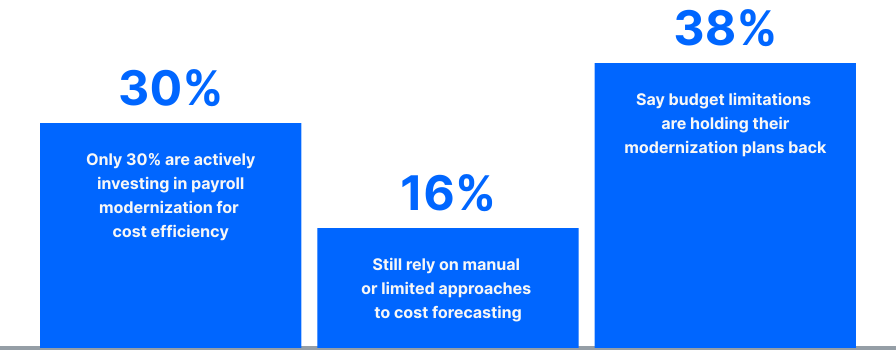
Given that readiness without action won’t be enough to guarantee success in a highly competitive landscape, this means that many organizations are at risk of falling behind.

What does
this mean
for your enterprise
organization?
These results make clear that enterprises feel better prepared for the future of payroll. That’s understandable as they are generally well-resourced and sophisticated in their organizational and technological approaches.
The challenge, therefore, is turning those resources, governance structures, and global reach into tangible action, driving payroll success in the long term and avoiding the paralysis of complexity, bureaucracy, and competing priorities.
In the next three chapters, we’ll explore how to bridge the gaps between perceived readiness and proven readiness across technology adoption, cybersecurity, and compliance.
you’re currently reading
Introduction


Previous
you’re currently reading
Cybersecurity readiness
Next
From confident readiness
to industry leadership
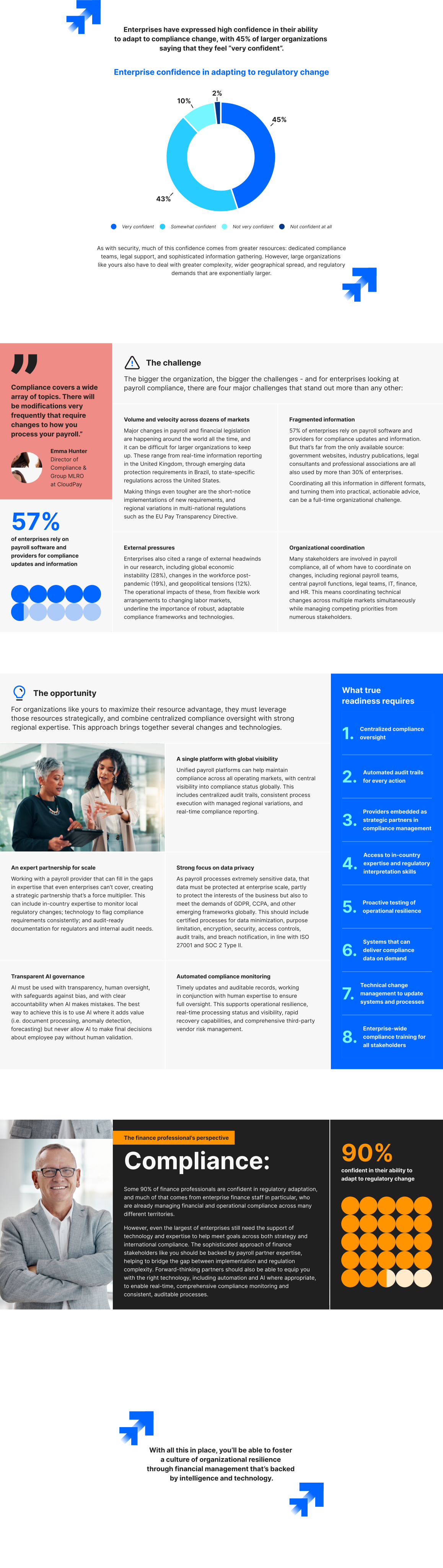
Enterprises have made it clear that they feel very ready
for automation and AI, and very confident in
their abilities around cybersecurity and compliance.
That’s easy to understand, given the relative wealth of
resources and infrastructure available to them:

Strategic positioning
- Resources for innovations like AI
and quantum-proof encryption - Purchasing power and influence
over vendors - Thought leadership success
stories that can reshape
market adoption

Operational advantages
- Standardizing processes
at a global scale - Access to dedicated
expertise across compliance,
security, and IT - The ability to take
a long-term perspective
on transformation

Market leadership
- Setting industry
benchmarks and standards - Attracting professionals
who want to work with cutting-
edge technology - Pushing vendors to develop
better solutions that
benefit the entire market
However, for all the resources, expertise,
and infrastructure you might
have, this confidence means nothing
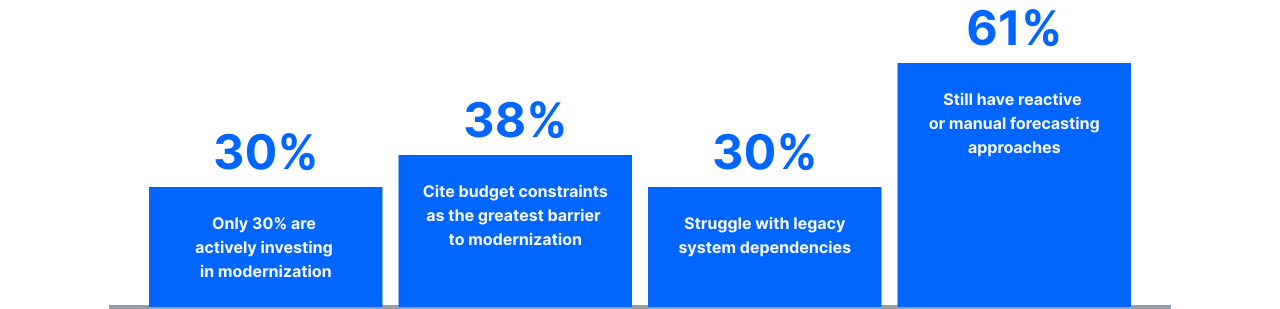
without execution. After all:
The organizational capability might be there, but so many obstacles can get in the way of operational execution:
- Multiple stakeholders can slow decision-making.
- Competing budget priorities can delay investment.
- Legacy systems can create technical debt that’s expensive to resolve.
- Risk-averse cultures steer organizations like yours clear of leading the way.
And when midsize organizations aren’t held back by these obstacles, they can use their agility to set the pace instead, ahead of their enterprise competitors.
The answer:
Strategic partnerships with vendors who understand enterprise complexity, and can navigate it alongside you.

CloudPay’s approach:
Scale, security, and strategic partnership
CloudPay has found the perfect way to blend together human expertise and the ‘three As’.
Deployed at enterprise scale, automation standardizes globally while managing local
exceptions consistently. AI is deployed with governance frameworks that satisfy audit and
compliance requirements, and APIs integrate with existing enterprise architecture.
This allows enterprises to benefit from:

A global platform with
end-to-end capabilities
A unified payroll platform that standardizes
processes while accommodating
regional nuances, and is capable of handling
hundreds of thousands of employees
across dozens of territories. This platform
can be integrated with complex
HCMs such as Workday, and is scalable
for enterprise expansion.

Security and compliance
built for enterprise scale
Certified to ISO 27001, SOC 2 Type II, and
ISO 22301, our partnership enables proactive
preparation for emerging threats, including
quantum-proof encryption. Incident response
protocols are tested and documented
for business needs, and work
alongside comprehensive vendor risk
management for supply chain security.

A strategic partnership that’s
more than just technology
Dedicated support teams who understand
enterprise organizational complexity,
and can help navigate stakeholder and change
management. Executive engagement can
help build business cases for sustained
investment, and compliance updates translate
regulatory changes into actionable
guidance across all markets.
Key takeaways
For enterprise finance leaders

Assess your true readiness
for payroll technology
- Evaluate actual financial reporting capabilities, including forecasting and budgeting
- Identify specific gaps in financial visibility and reporting efficiency
- Prioritize areas that present the greatest risk or opportunity

Don’t let budget constraints
delay necessary modernization
- View payroll technology as a strategic financial investment rather than a cost
- Create financial models showing long-term savings from technology investments
- Demonstrate reductions in manual reconciliations, human errors, and compliance penalty risks

Approach the ‘three As’ as an integrated
capability, not individual tools
- Automation, AI, and APIs work best when deployed together
- View payroll technologies as financial intelligence generators
- Prioritize real-time reporting, predictive analytics, and comprehensive compliance tracking

Make security and compliance proactive
- Build predictive modeling capabilities for workforce financial planning
- Use payroll technology to identify anomalies, analyze workforce costs, and track compliance
- Partner with providers already preparing for emerging threats such as quantum decryption and deepfake fraud

Simplify before
you automate
- 54% see process simplification as a major cost opportunity
- Years of growth and regional variation have created unnecessary complexity
- Standardize processes first, then automate consistently across markets
Ready to
turn readiness
into reality?
Future readiness in payroll isn’t a destination – it’s an ongoing
journey. By combining your natural agility with the right strategic
partnerships, you can effectively compete with – and potentially
differentiate from – enterprise competitors.
CloudPay’s team of experts can help you assess your current
capabilities, identify priority areas for improvement,
and build a roadmap for proven future payroll readiness.
Ready for readiness?

Previous
you’re currently reading
Conclusion

Your next read


